Method
Can a team of talented individuals, suspicious of one another, collaborate effectively, solve hard problems and innovate? Unequivocally, no.
When people guard against embarrassment by staying quiet, the team stops learning. The good idea goes unsaid. The doubt goes unspoken. The problem surfaces too late to fix cheaply.
What psychological safety actually is
The Harvard researcher Amy Edmondson named the condition that lets a team say the hard thing. She defines it as "a shared belief held by members of a team that the team is safe for interpersonal risk-taking" (Edmondson, 1999).
It is a kind of trust. On a safe team people speak up, admit mistakes, ask for help and challenge the plan, because they expect curiosity in return. Candour becomes normal while the work is still moving, so problems get caught early instead of at the deadline.
This matters more as work speeds up. Edmondson's research and a 2026 Harvard Business Review piece on AI eroding trust, land on the same point: teams surface real problems and adopt new tools fastest where it is safe to say "I don't understand this yet."
How the Team Contract builds it
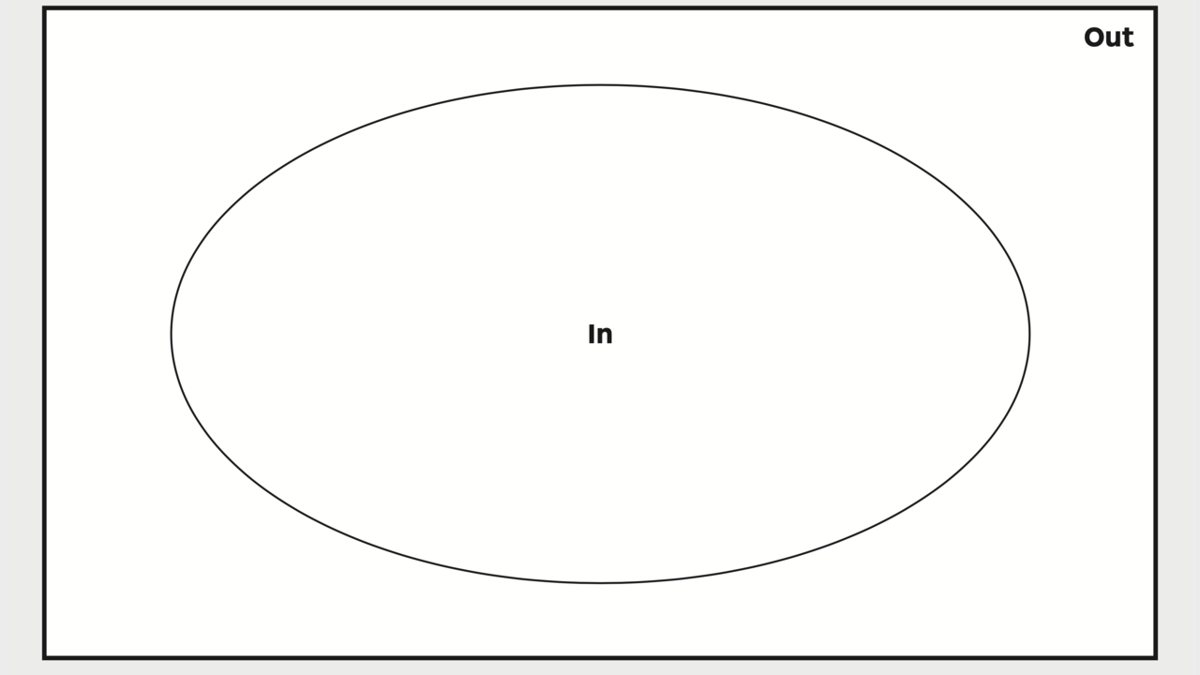
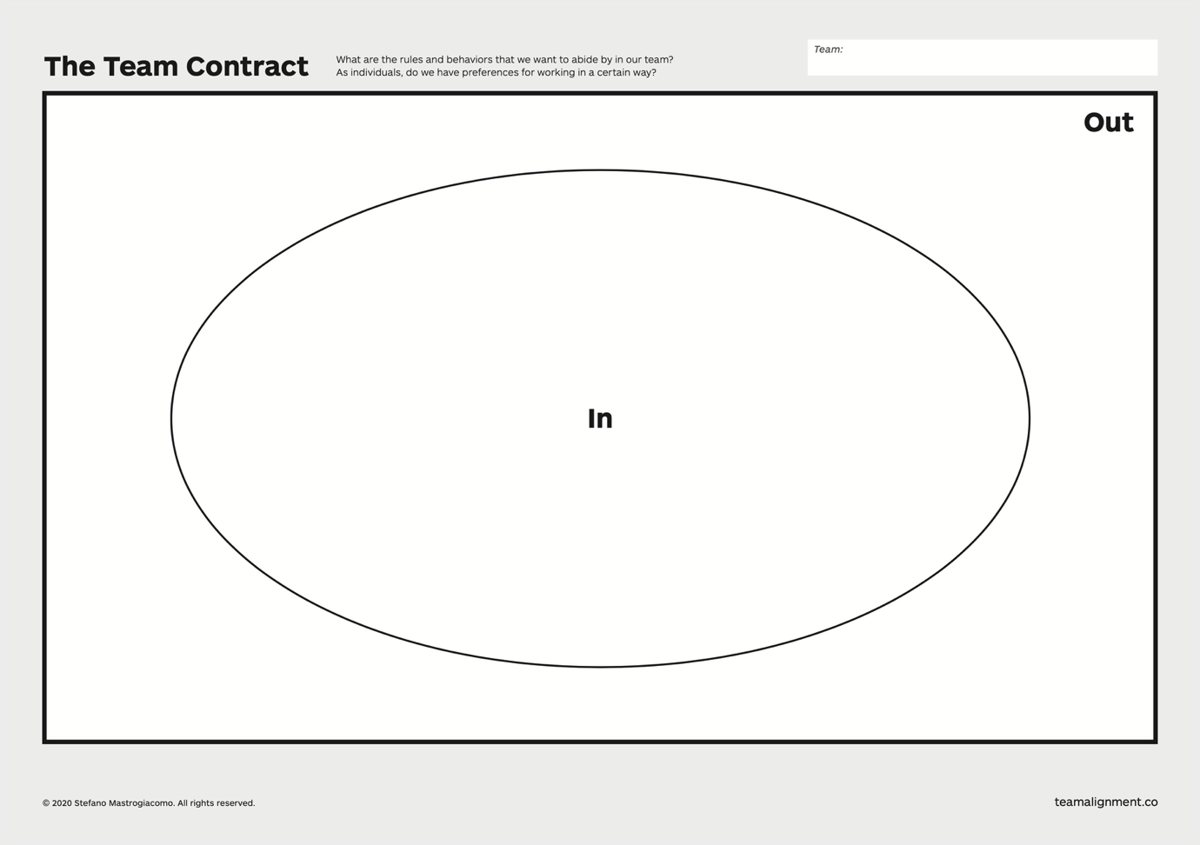
Safety rarely arrives on good intentions. You build it by agreeing, out loud, how the team will work. The Team Contract is a one-page tool for that: a short session where a team names the behaviours it wants (IN) and the ones it will not accept (OUT).

It makes values explicit, sets how decisions get made and how the team handles failure and gives the group a legitimate way to call out behaviour that breaks the agreement. Naming the rules together is what heads off the quiet sense of unfairness that corrodes a team later.
How to run the Team Contract
Gather the team or the key stakeholders and put the poster on the wall.
- Frame. Name the team or project and the period it covers.
- Prepare alone. Five minutes: what rules and behaviours do we want as a team and how do I personally prefer to work?
- Share. Each person takes three minutes to put their INs and OUTs on the poster.
- Consolidate. Discuss, adapt and agree the shared list, about twenty minutes.
- Validate. Close when everyone agrees.
Pairs with the Team Alignment Map
The Team Contract sets the agreement for the whole collaboration. The Team Alignment Map keeps the work itself aligned, meeting by meeting. Use the Contract at a kickoff, when new people join, or when a reset is needed.
This week. At your next kickoff, run a thirty-minute Team Contract before the work starts. Download the Team Alignment Toolkit, free, in more than ten languages.
Illustrations by Séverine Assous, illustrissimo.fr. Psychological safety after Amy Edmondson, The Fearless Organization (2018).