8 AI prompts for psychological safety
Eight prompts to prepare questions and responses that help people raise concerns, with limits on what AI can infer about a team.
A team that reports more mistakes may be more willing to discuss them. A low error count alone tells us little about whether people feel safe to speak up.
These eight prompts help you prepare questions and responses when people hesitate to speak up. They draw on Amy Edmondson’s research and the Team Contract. The examples come from earlier AI simulations; they do not demonstrate an improvement in a real team’s psychological safety.
Before using a prompt, anonymise the situation and follow your organisation’s rules on AI use. Ask the assistant to separate supplied facts from hypotheses, name missing information and suggest questions you can check with the people concerned.
1. Find out who's stopped talking
When. Meetings are polite and the real conversation happens in the corridor.
Here are our last [N] decisions and who spoke on each: [paste]. Map the silence: who hasn't disagreed in a month, which topics never get challenged, and where unanimity came faster than the stakes justify. Name the two silences that should worry me most, and one hypothesis for each.
The reasoning. Speaking up feels risky before it feels useful; Harvard's Amy Edmondson called the antidote psychological safety. Silence and rapid agreement can prompt a useful question. They do not, by themselves, establish that people are afraid to speak.
Earlier simulated example. Fed six decisions with speaker lists, the assistant found that both senior engineers had gone silent since a blameful post-mortem, and that migration risks passed unchallenged while staffing got debated freely: In that scenario, participation differed by topic. The pattern would need to be discussed with the team.
2. Ask the question that invites bad news
When. Problems travel upward too slowly, and you find out last.
Draft 5 questions for tomorrow's review on [project] that make bad news easy to report: specific, answerable without blame, and phrased so the messenger looks competent. Ban 'any issues?' and every question a nod can answer.
The reasoning. Edmondson calls it inviting participation: people speak when the leader asks real questions, and keeps asking after the first honest answer.
Earlier simulated example. The first run returned exactly the questions this prompt exists to kill ("Are there any blockers?"); the ban was added after that run. The second produced keepers like "Which part of the migration would you not want your name on yet?"
3. Respond without killing candour
When. Someone just brought you a mistake, and your reaction will be quoted for months.
Someone on my team just told me: [describe]. Draft my first 60 seconds: thank the messenger concretely, separate the person from the failure, and name the next learning step. Then list 3 phrases I might say by reflex, in this exact situation, that would teach the team to stay quiet.
The reasoning. Edmondson's third practice, responding productively: how you respond to bad news affects whether people bring you the next concern.
Earlier simulated example. The reflex list was the sharpest output: "How did we miss this for three weeks?" relitigates the delay the messenger just ended, and "Let's keep this between us for now" teaches that truth is dangerous.
4. Examine the cost of information arriving late
When. The sponsor asks why safety deserves agenda time.
Here are 3 recent incidents where information arrived late: [describe]. For each, reconstruct the timeline: when it was first known, when it reached the decision-maker, what the delay cost in rework, calendar and exposure. One page, framed as the cost of silence, no names, no blame.
The reasoning. Edmondson's research began in hospitals with a paradox: the safer teams reported more errors. A timeline can help distinguish when information became available from when it reached someone able to act. Check the dates before attributing a cost to the delay.
Earlier simulated example. One line carried the whole page: "the information existed inside the organisation for 21 days before it reached anyone who could act on it."
5. Sort the failure before you react
When. Something failed and the room wants a culprit.
Here's what failed: [describe]. Classify it: preventable (deviation from a known process), complex (a system surprise from many small factors), or intelligent (a thoughtful experiment in new territory). Justify the classification, then tell me what response this type deserves, from accountability to congratulations.
The reasoning. Edmondson's failure spectrum: treating every failure as blameworthy teaches hiding. Sorting first makes the response fair, and fairness is what your team is testing.
Earlier simulated example. The incident behind the blameful post-mortem reclassified as a complex failure with one preventable strand, and the advice landed where it hurts: say so publicly, because the room currently believes it was all one person's fault.
6. Write the rules you actually work by
When. A kickoff, new members joining, or a reset after a rough patch.
Prepare a 30-minute Team Contract session for my team of [N]: the exact questions that surface which behaviours we want in and which we refuse, how we decide, how we treat failure, and what I as the leader should name first to make honesty cheap for everyone else.
The reasoning. The Team Contract, from my toolkit: the team agrees how its members will work together. The leader’s response to disagreement will show whether those rules can be relied on.
Earlier simulated example. The simulation suggested that the leader acknowledge their own actions: "Two things I did in the post-mortem that I would not do again: I asked who before I asked what, and I let the room watch me do it."
7. Prepare a conversation about the team’s experience
When. You want to understand what makes speaking up difficult.
Draft discussion questions about [team context]: raising concerns, admitting mistakes and asking for help. Use neutral language and ask for concrete examples. Do not turn the answers into a psychological safety score or diagnose individuals. Suggest how we can discuss the findings while protecting confidentiality in a small team.
The reasoning. Amy Edmondson, Professor of Leadership and Management at Harvard Business School, developed a research measure of team psychological safety. Changing its wording produces a different instrument. AI-generated questions can support a conversation; they should not be presented as a validated survey.
What to check. For a measured assessment, use the established instrument and its administration guidance. Agree how responses will be handled, especially where a small team could make respondents identifiable.
8. Make it safe to challenge you
When. Your own seniority is the silencer.
Draft 3 leader moves for my next steering that lower the cost of challenging me specifically: how I ask for pushback on my own proposal, the fallibility sentence I open with (specific, never theatrical), and how I reward this month's best disagreement. My context: [describe].
The reasoning. Detert and Edmondson on upward voice: people calibrate their candour to the most senior reaction in the room. Acknowledging a specific uncertainty can make disagreement easier; your response afterwards needs to support the invitation.
Earlier simulated example. The fallibility sentence was specific enough to use unchanged: "I set the cutover date before the environment findings; that date is mine, and it deserves your challenge."
Try this
- Stop asking "any issues?"; ask one real question from prompt 2 instead.
- Prepare a discussion about speaking up, with a clear agreement on confidentiality (prompt 7).
- Watch what happens to bad news in the week after your next first-60-seconds response (prompt 3).
The honest limit
The prompts prepare the conditions; safety itself is built in the room, one response to bad news at a time.
Prompts like these are also generic by design. An assistant configured to your company's culture and governance prepares them in your context, and the final call stays with you.
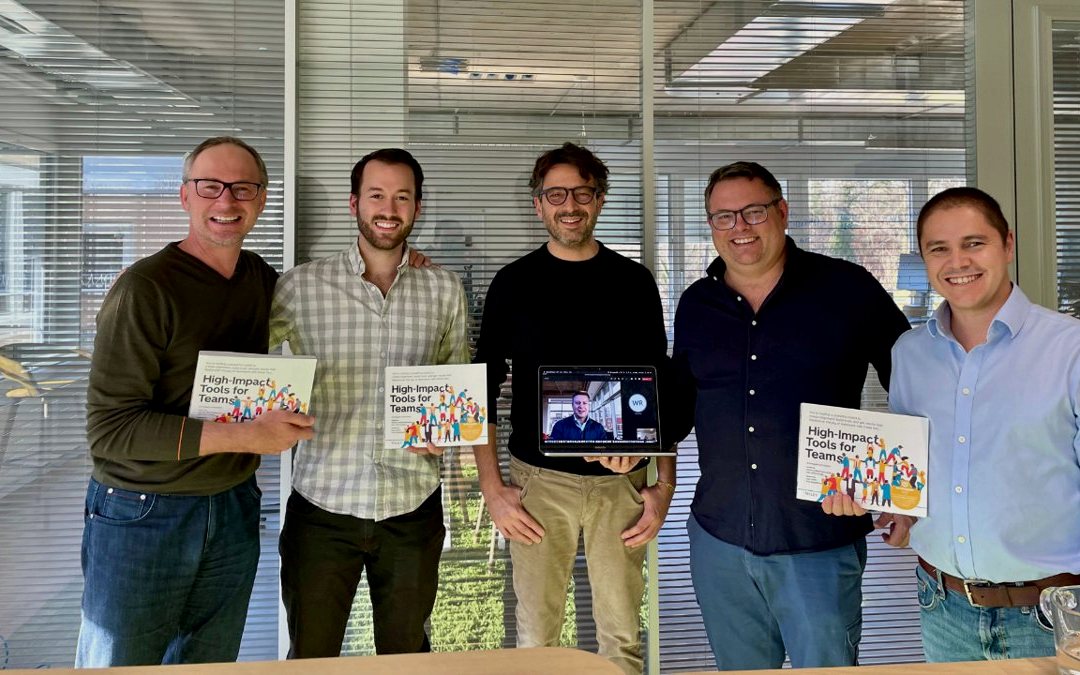
Grounded in Amy Edmondson's The Fearless Organization, and the Team Contract in High-Impact Tools for Teams (Wiley, with Alex Osterwalder, foreword by Amy Edmondson). Also credited: Detert and Edmondson on upward voice.