9 AI prompts for resolving team misalignment
Nine prompts to examine different understandings of the work, prepare a Team Alignment Map session and review commitments with the team.
Everyone nodded at the strategy. Half the room heard a different one.
These nine prompts help prepare a discussion about goals and commitments across teams. They draw on the Team Alignment Map and research on shared understanding. The examples come from earlier AI simulations; agreement still has to be reached with the people doing the work.
Before using a prompt, anonymise the situation and follow your organisation’s rules on AI use. Ask the assistant to separate supplied facts from hypotheses, name missing information and suggest questions you can check with the people concerned.
1. Describe where the work is getting stuck
When. Delivery slips and the team has different explanations for the delay.
Here are the symptoms in my team: [describe freely]. Compare them with the classic misalignment signature: unclear responsibilities, duplicated work, meetings that end without decisions, priorities that shift weekly, units working in silos. Name the two symptoms that dominate and tell me what they suggest about where alignment broke.
The reasoning. Start with observable symptoms and compare explanations with the team. A list of symptoms can guide the discussion; it cannot establish the cause on its own.
Earlier simulated example. The assistant refused to treat all five symptoms and picked the dominant pair, then pointed above the roadmaps: "the break sits at decision rights and the missing shared objectives layer. The roadmaps duplicate because nothing above them decides."
2. Do we agree on the goal?
When. You suspect the team holds different goals under one approved slide.
I asked each member separately to write our team's goal in one sentence. Here are the [N] answers: [paste]. Cluster them, ignore wording differences, and name the real divergences. Rank them by execution risk, then draft the question that would settle the biggest one at our next meeting.
The reasoning. Teams run on what everyone knows everyone knows; Stanford language psychologist Herbert Clark called it common ground. Differences between the answers show what needs clarification. They are a starting point for discussion, not a score of the team’s alignment.
Earlier simulated example. Eight separately collected sentences clustered into four stories: cost, speed, continuity, identity. Highest execution risk sat between cost and continuity, because the two price the migration differently. The drafted question alone was worth the exercise: "Which client-visible risks are we accepting this year to hit the cost target?"
3. End the fight about the facts
When. The team argues in circles about "the facts".
Here's our disagreement: [describe]. Separate the first-order elements (events, numbers, dates everyone accepts) from the second-order elements (what each side makes them mean). List the meanings as pairs: 'A reads X as..., B reads X as...'. Then name the one split that, once resolved, unblocks the most.
The reasoning. Palo Alto family-therapy pioneer Paul Watzlawick distinguished the facts, usually shared, from what people make them mean, always private. Misalignment lives in the meanings.
Earlier simulated example. The standing fight over whether the platform was "ready" split cleanly: everyone accepted the 12 migrated applications and 3 rollbacks; engineering read the rollbacks as normal hardening, ops as not production-ready. The unblocking move: written exit criteria before the next steering.
4. What nobody said out loud
When. The plan was agreed, and execution behaves as if it wasn't.
Here is our agreed plan: [paste]. List the 10 assumptions someone must hold for this plan to make sense. Assumptions must be specific to this plan; ban generic ones like 'we have enough budget'. I'll mark which were never said aloud. Rank the unsaid ones by the damage done if people hold different versions.
The reasoning. Chicago psychologist Boaz Keysar showed it in experiment after experiment: we fill what was never said with our own version, and assume everyone did the same.
Earlier simulated example. Before the specificity guard, the first run returned platitudes that fit any plan in any company; the guard was added after that run. The second surfaced real ones: engineering assumed a Q4 feature freeze, finance assumed the decommissioning savings land this fiscal year. Both were marked never said aloud, and ranked top two by damage.
5. One hour to realign the team
When. You have one hour to rebuild alignment on one initiative.
Prepare a one-hour alignment session on [initiative] around four questions: what do we intend to achieve together, who will do what, what resources do we need, what can prevent us from succeeding. For each: the exact wording to ask the room, a timebox, what a weak answer sounds like, and the follow-up that firms it up.
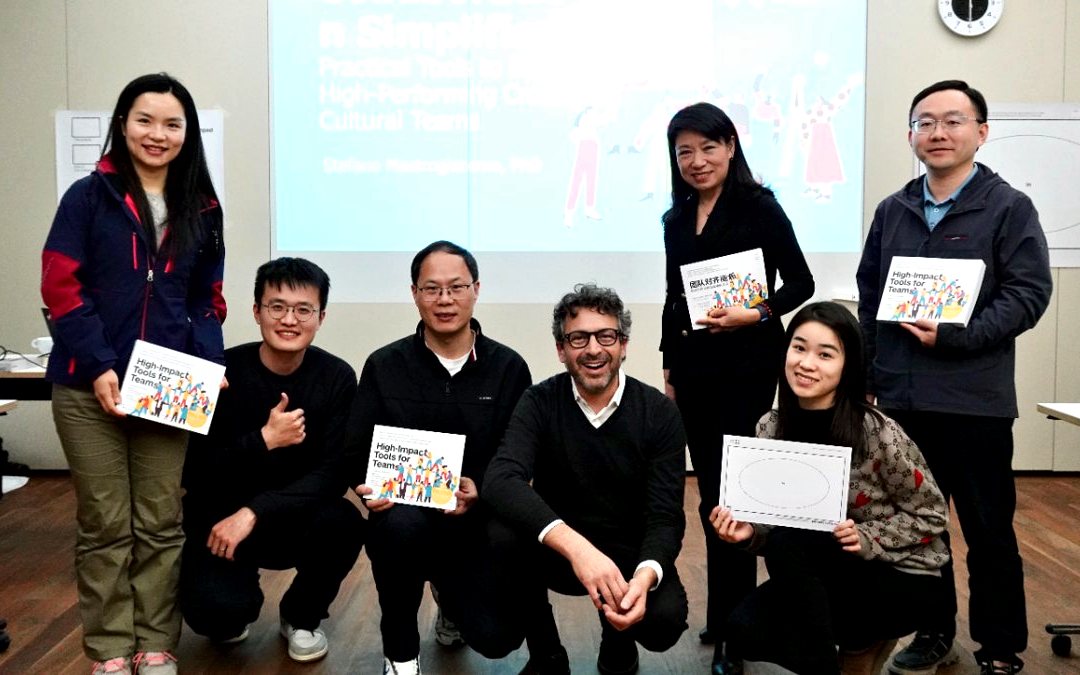
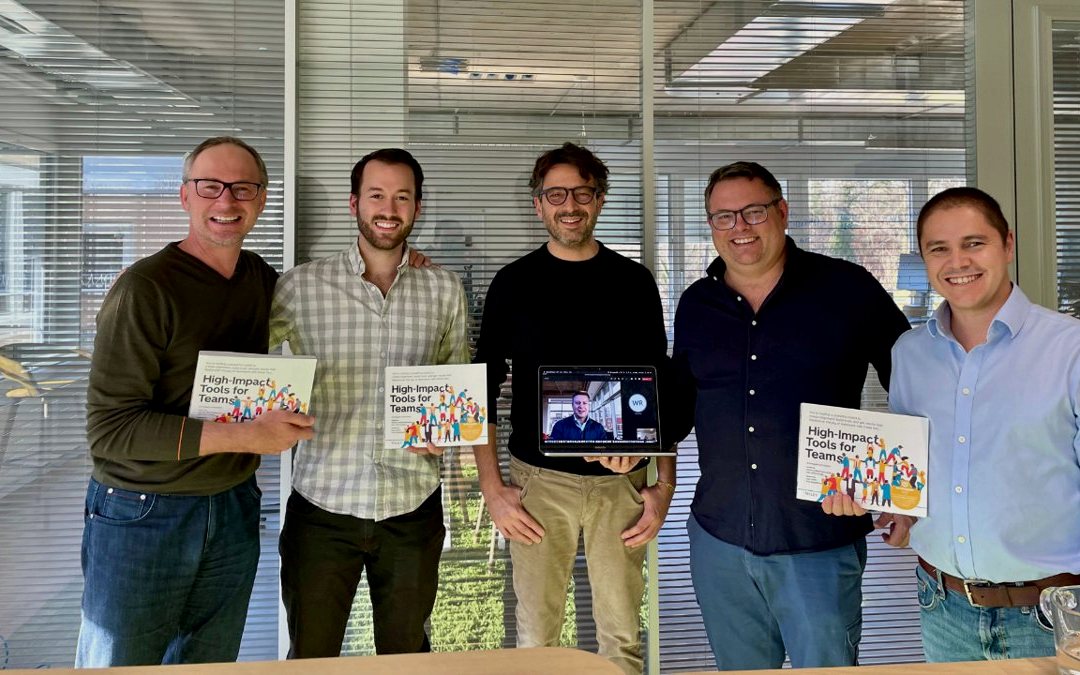
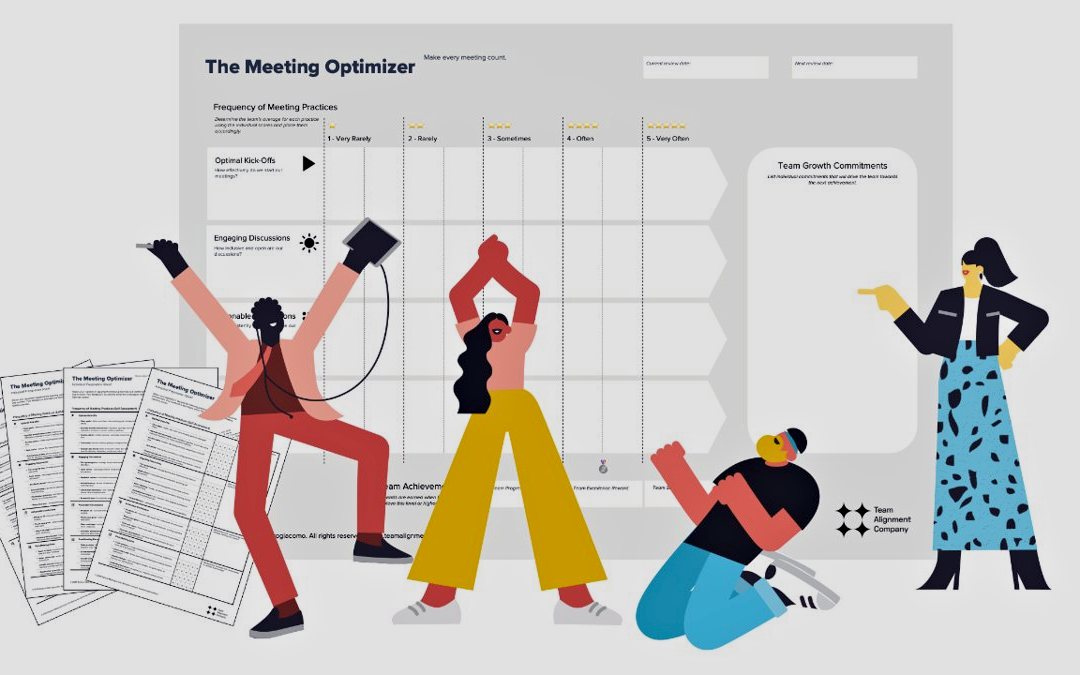
The reasoning. These four questions are the columns of the Team Alignment Map, the tool I designed and presented in High-Impact Tools for Teams, co-authored with Alex Osterwalder. Filling them together makes differences visible. The team needs to revisit its commitments as conditions change.
Earlier simulated example. The hour came back fully built, and the weak-answer catalogue was the sharpest part: objectives stated as activities ("continue the migration"), commitments without a name attached, resources listed as departments instead of capacity, risks phrased as weather ("resistance to change").
6. Stress-test the too-clean plan
When. The plan looks complete and suspiciously clean.
Here's our plan in four lists: objectives, commitments, resources, risks: [paste]. Identify missing resources and unresolved risks. Suggest actions, proposed owners and decisions required from the sponsor. Keep risks visible until the team has agreed how to address them. Do not assume that adding an action provides the capacity to carry it out. Ask what evidence is missing.
The reasoning. In the Team Alignment Map method this is the backward pass: the team turns resource gaps and risks into proposed objectives and commitments, then checks whether those commitments are feasible. A risk remains open until it is addressed or explicitly accepted.
Earlier simulated example. The pass found what the clean plan hid: no release engineer for the cutover, no budget line for parallel-running licences, a single-architect dependency. Four new objectives came back, each with an owner, plus the borrow list: two squads' Q4 capacity and finance's patience.
7. Find out if the yes was real
When. Everyone agreed, and you don't trust it.
Here's the decision we just made: [paste]. Draft a closing round for the meeting: one question per person that collects evidence of understanding, meaning their next concrete move, with a date on it. Tell me which answers should worry me.
The reasoning. Herbert Clark's test for understanding, in plain terms: ask people to demonstrate their understanding in relation to the work. Their proposed next step can reveal a difference that a simple nod leaves hidden.
Earlier simulated example. One question per seat, personalised ("What do you switch off first, and by when?"), and a precise list of worry answers: a restated principle instead of a move, a move without a date, and "I'll align with my team", which delegates the understanding you were testing for.
8. Name the decision everyone avoids
When. Each function faithfully executes its own top three priorities.
Here are the priorities as each function states them: [paste per function]. Build the collision table: where two functions' priorities compete for the same people, budget or weeks. For each collision, state the trade-off as a choice between two named options, with what each option gives up, and name who owns that choice.
The reasoning. When two functions need the same capacity for different priorities, more communication will not settle the allocation. Someone with the authority to decide needs to make that choice.
Earlier simulated example. The first run built the table correctly, then named the avoided trade-off as mush ("balance innovation and stability"); the named-options requirement was added after that run. The second stated it as a real choice: freeze features in Q4 and give up two client commitments, or migrate in Q1 and give up the fiscal-year savings. Owner: the CEO, because both options cross unit lines.
9. Make the alignment last
When. The alignment you built last month has already drifted.
Design a 20-minute fortnightly re-grounding ritual for my team of [N] on [initiative]: two questions that surface drift early, one artifact we update live in front of everyone, one observable signal that a full realignment is due, and who chairs it.
The reasoning. Herbert Clark describes grounding as establishing sufficient mutual understanding for the task. As the work changes, the team needs to check that understanding again.
Earlier simulated example. The ritual's strongest element was the observable signal, which turns "drift" from a feeling into an event: the same decision reopening a second time. Its two questions are keepers: "What did you change this fortnight that the plan doesn't know about?" and "Which commitment is quietly late?"
Try this
- Stop re-explaining the strategy; run the one-sentence goal test instead (prompt 2).
- Draw the four columns with your team and spend an hour filling them in (prompt 5).
- Watch who closes the next decision with a dated move and who closes it with a nod (prompt 7).
The honest limit
The prompts find where alignment broke and prepare the session that rebuilds it. The rebuilding happens in the room, where people commit in front of each other and see the commitment land.
Prompts like these are also generic by design. An assistant configured to your company's culture and planning rhythm prepares them in your context, and the final call stays with you.
Grounded in the Team Alignment Map from High-Impact Tools for Teams (Wiley, with Alex Osterwalder, foreword by Amy Edmondson). Thinkers credited above: Herbert Clark, Paul Watzlawick, Boaz Keysar.